
What Is Antistatic Fabric and How Does It Work?
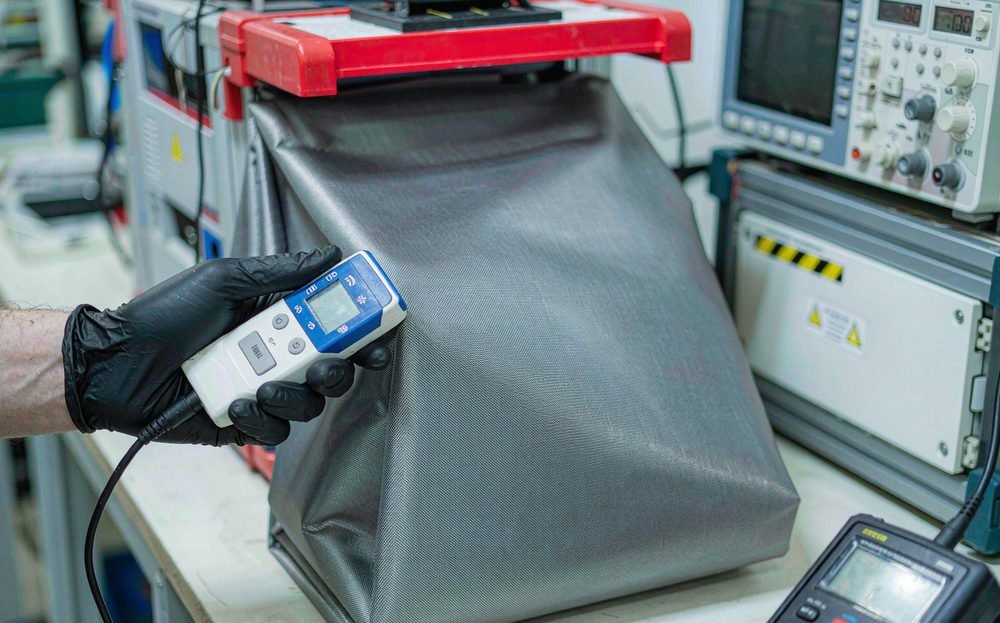
Everyday movement — walking, flexing, taking a jacket off — builds static electricity on the surface of ordinary textiles. In most workplaces that is only a nuisance. In refineries, flour mills, paint shops or electronics assembly, a static discharge can ignite flammable atmospheres or damage sensitive components.
Antistatic fabric is designed to dissipate that charge before it accumulates to a hazardous level.
How it works
The most common approach is to integrate conductive yarns into the fabric. These are usually stainless steel or carbon-core filaments, spun at regular intervals into the weave or knit so they form a grid across the surface. The grid gives static charges a controlled path to bleed away — through the garment to earth — instead of building up on the fabric surface until a spark can jump.
Two details affect how well this works:
- Grid spacing — a closer grid (e.g. 5 mm) dissipates charge faster than a wider one (e.g. 10 mm).
- Grounding — antistatic clothing only works as part of a grounded system; isolated fabric still holds charge.
How it is measured
In Europe, antistatic performance for protective clothing falls under the EN 1149 series. The two most referenced parts are EN 1149-1 (surface resistivity) and EN 1149-3 (charge decay); EN 1149-5 sets the material and design requirements for garments. We cover the difference between the test methods in a separate article: EN 1149-3 vs EN 1149-5.
Where it is used
Antistatic fabric is rarely specified on its own. In oil, gas and chemical workwear it is normally combined with flame retardancy in a single FR/AS fabric — the conductive grid serves both functions. In electronics manufacturing, cleanroom garments and fuel handling, antistatic properties may be the primary requirement.
When comparing fabrics, ask for the test values (resistivity and decay time), the grid construction, and whether performance is stated at fabric level or for the finished garment — these are the numbers that matter for compliance.