
Understanding Flame Retardant Fabrics: Types, Properties and Applications
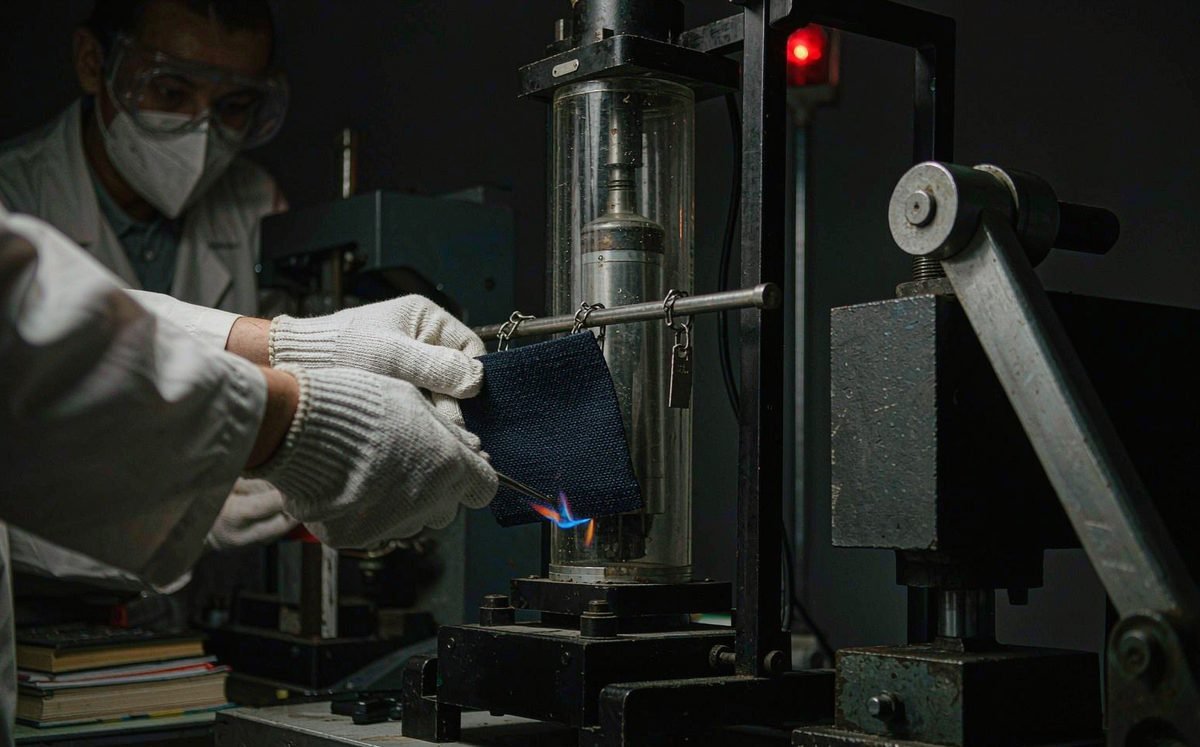
Flame retardant (FR) fabric is a textile designed to resist ignition, slow the spread of flame, and self-extinguish once the ignition source is removed. It is not fireproof — no textile is — but it buys the wearer the seconds needed to escape, and it prevents the fabric itself from becoming the fuel.
For industrial workwear buyers, the practical question is rarely "is it FR?" but "which FR technology suits this hazard, this garment life cycle, and this budget?"
Two routes to flame retardancy
Almost every FR fabric on the market belongs to one of two families.
1. Treated (finished) FR fabrics
A conventional fibre — usually cotton, cotton/nylon or CVC — is treated with a flame retardant chemistry that either reacts with the cellulose or is cured into the fibre structure. The two dominant industrial routes are the ammonia-cured THPC process (often called Proban-type) and the phosphorus-based CP finish (Pyrovatex-type).
Advantages: good hand feel, cotton-like comfort, lower cost, wide availability in twill and ripstop. The limitation is durability — protection is a function of how much finish remains in the fabric, so wash procedures and industrial laundry cycles matter.
2. Inherent FR fabrics
The flame resistance comes from the fibre itself: aramid (meta- and para-aramid), modacrylic, FR viscose, and blends of these. Because the property is intrinsic, it cannot be washed out or worn away.
Advantages: permanent protection, excellent dimensional stability, often better resistance to molten metal splash. The trade-offs are higher cost, different colouration behaviour, and a stiffer hand in heavier constructions.
The right question is not "treated or inherent" in the abstract, but how many industrial wash cycles the garment must survive in service.
What "flame retardant" actually measures
FR performance is described through several distinct properties, and a fabric can be strong in one while weak in another:
- Limited flame spread — whether the fabric self-extinguishes after the igniting flame is removed, and whether afterglow persists.
- Char formation — the fabric should form a protective char barrier rather than melting.
- No melt drip — thermoplastic fibres can melt and drip, transferring burns to the skin. This is why polyester-rich blends are usually avoided in primary FR layers.
- Heat transfer — resistance to convective, radiant and contact heat, which is separate from flame spread.
- Molten metal splash — relevant to welders and foundry workers, where the fabric must shed droplets rather than hold them.
Common constructions and where they fit
| Fabric | Typical weight | Protection route | Best suited to |
|---|---|---|---|
| 100% cotton FR twill | 240–320 GSM | Treated | General industrial workwear, coveralls, shirts |
| Cotton / nylon FR ripstop | 210–260 GSM | Treated | Workwear needing higher tear strength |
| CVC FR plain | 180–230 GSM | Treated | Lightweight shirts, summer workwear |
| FR antistatic twill | 250–300 GSM | Treated + conductive grid | Oil & gas, petrochemical, explosive atmospheres |
| Inherent FR aramid blend | 150–260 GSM | Inherent | High-risk, high-wash-cycle programmes |
| FR knitted mesh / jersey | 160–220 GSM | Treated or inherent | Base layers, liners, ventilation panels |
The standards that usually apply
Fabric performance is normally specified through the garment standard it must satisfy. The most frequently referenced in industrial tenders are:
- EN ISO 11612 — protective clothing against heat and flame. Test codes cover limited flame spread (A1/A2), convective heat (B), radiant heat (C), molten aluminium and iron splash (D/E) and contact heat (F).
- ISO 11611 — clothing for welding and allied processes, with A1/A2 flame spread classes and requirements on spatter resistance.
- NFPA 2112 — US standard for flash fire protection in industrial settings, usually paired with NFPA 70E for electrical work.
- EN 1149-5 — antistatic material performance and design requirements, relevant when FR and static control are combined.
Note that a fabric supplier can report fabric-level test data, but certification is normally issued for the finished garment. Always confirm which level the garment must reach before specifying the fabric.
Selection checklist
- Identify the hazard — flash fire, sustained flame, radiant heat, molten splash, arc flash, or a combination.
- Match the standard and level — the required test codes drive the weight and construction.
- Set the service life — number of industrial wash cycles determines whether a treated or inherent fabric is more economical over time.
- Consider layering — base layer, mid layer and outer shell each have different requirements.
- Check comfort and compliance in use — a fabric that is too heavy in a hot climate will not be worn correctly, which defeats the protection.
- Confirm colour and shrinkage — FR treatments can affect dye uptake and residual shrinkage.
Care and laundering
Treated FR garments must be washed according to the supplier's instructions. Contamination with oils, solvents or combustible residues can impair performance even when the finish itself is intact. Inherent FR fabrics are more tolerant but still require attention to shrinkage and mechanical damage. In both cases, garments with holes, thin areas or heavy soiling should be withdrawn from service.
If you are specifying FR fabric for a workwear programme and need indicative specifications, test reports or samples, our team can help you narrow the options.
Discuss Your Protective Fabric Requirements
Composition, weight, construction, colour and finishing — we can align the specification with your garment programme.
Contact Our Team