
Woven vs Knitted Flame Retardant Fabric
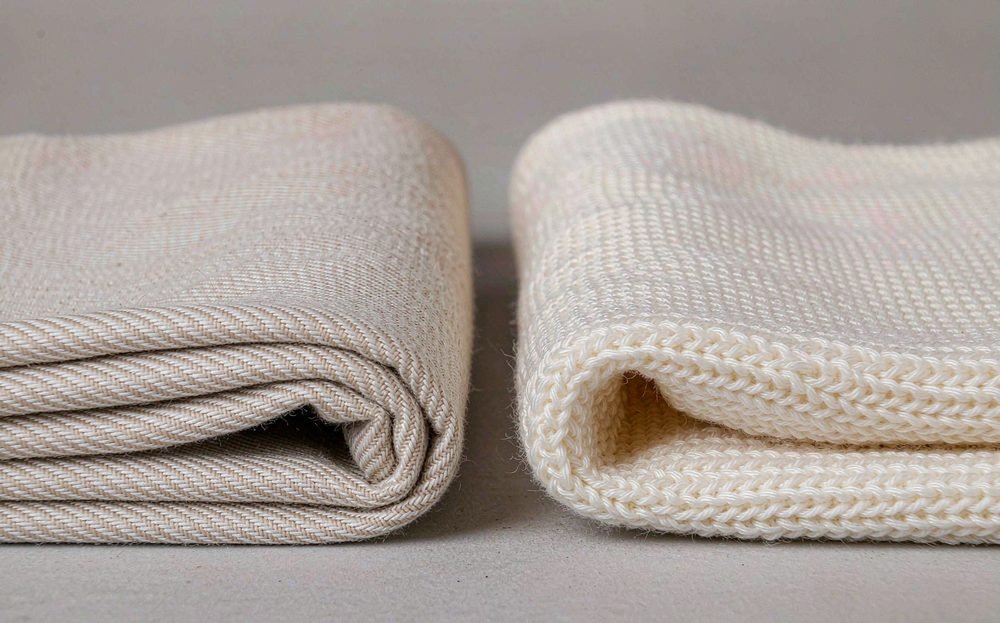
Both woven and knitted fabrics can carry flame retardant properties — the FR treatment or fibre works the same way in either. The difference lies in how the fabric is constructed, and that changes strength, stability, comfort and the jobs each is suited to.
Woven FR fabric
Woven fabric is made by interlacing two sets of yarns at right angles. The result is a stable, low-stretch structure. In workwear this translates into:
- Higher tensile and tear strength at a given weight.
- Good dimensional stability — garments keep their shape through industrial laundering.
- A surface that holds up to abrasion, which matters for coveralls and jackets.
Common woven FR constructions include twill (dense and durable, the default for coveralls), ripstop (a reinforced grid for tear resistance) and plain weave (lighter, for shirts).
Knitted FR fabric
Knitted fabric is formed by interlooping a single set of yarns. The loops give the fabric natural stretch and a softer hand. Typical uses:
- Base layers and underwear worn under FR outer garments.
- Mesh panels and liners where airflow matters.
- Lighter jersey garments where comfort is the priority.
Knitted structures are generally less abrasion-resistant and more prone to snagging than wovens, which is why they are rarely used as the outer shell in high-wear positions.
Which one to choose
A practical rule of thumb: woven for the outer shell, knitted for what sits next to the skin. Most FR workwear programmes combine both — a woven coverall over a knitted FR base layer. If a single garment must cover both roles, weight and reinforcement become the deciding factors, and a mid-weight woven twill is usually the safer specification.
As with any FR garment, confirm the applicable standard and required test codes before choosing the construction — the construction supports the specification, it does not replace it.